
Table of contents
%20Logo.svg)
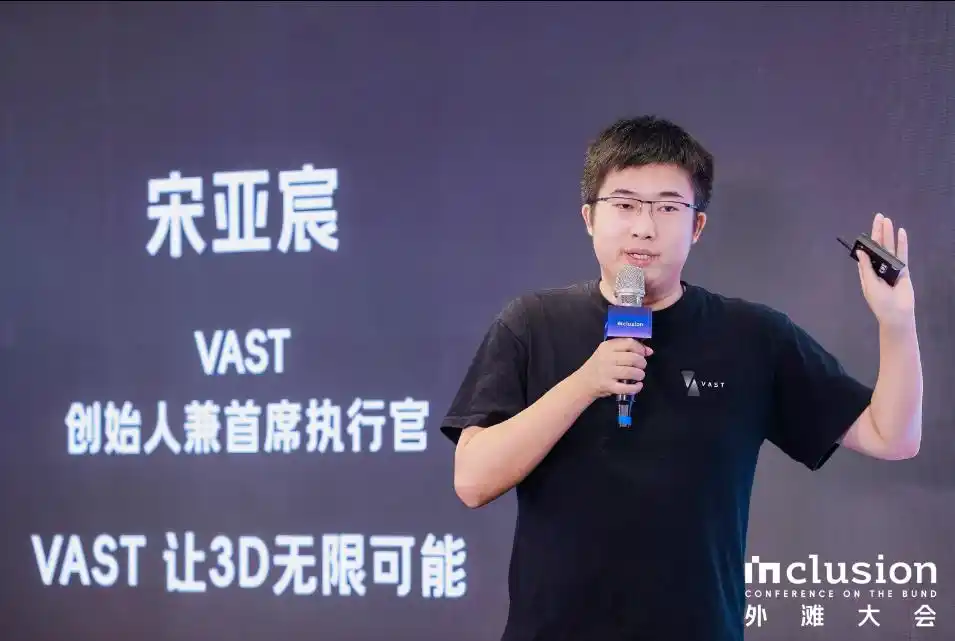
- Simon Song
- Beijing, Hangzhou, Shanghai
- Business started in 2023
- 100+ Employees
- 12 Million ARR in USD
- 5 million global developers using our products
- We’re open to funding and recently closed a Pre-A+ round in June 2025, raising tens of millions.
- VAST
Simon what's your backstory?
My background is a bit different from that of most people in China. I started boarding school at the age of two and spent many years in the United States. Growing up in such diverse environments taught me how to collaborate with others. It also made me more open-minded and adaptable.
In elementary school, my teacher, an art teacher, rewarded us with ancient coins instead of candy or gold stars. Most kids didn’t care, but I became fascinated with history and the stories behind these old coins. From a very young age, I memorized classic texts, read historical novels, listened to traditional storytelling, and even spent summers in mountain retreats practicing meditation. I often skipped classes just to read outside, chasing my curiosity.
In middle school, I attended a private Christian school in the United States. It felt like a hidden paradise, taught by Ivy League graduates who had stepped away from the corporate world. I learned a lot academically, but I also developed a deep interest in religion, studying Hebrew and Arabic, exploring Judaism and Islam, and even visiting Israel during my junior year. A professor there once told me: “Embrace the complexity of the world.” High school in the U.S. was course-based, so I finished all the math and science I could in my first year and spent the remaining years on English, philosophy, theology, and history, which I grew to love.
After school, I joined SenseTime, where I worked in the CEO’s office on strategy. Strategy required deductive reasoning, while my earlier experiences in embracing complexity were more inductive. Learning to balance both approaches has been invaluable.
At SenseTime, I also formed teams for the Global Game Jam every year. We never won, but I loved the process. I can say that gaming for me is a lifelong passion. In college, I even wore a dent into my mattress from gaming too much. That love for games naturally led me to the world of AI 3D modeling, where I could build new worlds from imagination.

What does VAST do and how did you come up with the idea?
VAST focuses on building and applying AI-powered 3D foundation models. Our core product, Tripo, lets anyone generate high-quality 3D models in just minutes. With our technology, even people without professional training can create complex 3D content easily.
The idea for VAST came from what I saw in my previous work at SenseTime and MiniMax. In 2019, I worked on AI for animation. I thought animation was purely creative, but I realized it was often highly labor-intensive, with many people doing repetitive tasks. I was inspired by the bold, original student projects we saw, yet noticed how their work became more routine once they joined the industry.
In 2020, while working on AI for games, I saw the same problem. The biggest barrier to creation was always art assets. If we could solve this, many more people could take part in building games and virtual worlds.
That’s why I founded VAST. I wanted to use AI to simplify 3D creation and make it accessible to everyone. Our goal is to make 3D content as common and easy to create as images and videos, so anyone can bring their ideas to life and share them with the world.

What metrics or feedback confirmed you’d reached product-market fit?
Tripo has dramatically reduced the time needed to create 3D content, making the entire process much more efficient. We feel this directly every day while designing and testing our own workflows. A major milestone for us was the launch of Tripo Studio, where we brought many tools together into a single workspace for the first time and added smart features to make the workflow smoother and more intuitive.
Inside the company, we run a “CEO Program” (Chief Experience Officer Program), which now includes over 1,000 active early users. Every week, we conduct in-depth interviews with two or three power users, mostly from overseas. Each session lasts two to three hours. We listen closely to their feedback, what works, what doesn’t, how they use the product, how much time or cost it saves them, and where they still struggle.
We turn these insights directly into action. This has become one of our most effective ways to truly understand our users. We also share the key takeaways internally through weekly email reports sent to the entire team, including interns, so everyone understands who is using the product, how they use it, what problems they face, and what we are doing to improve.
How does Tripo AI stand out in such a competitive AI and 3D modeling space?
This space is highly competitive, with many large companies entering the field. Still, I have strong confidence that we can stand out. At the product level, Tripo Studio is the world’s first all-in-one AI 3D workstation. On a single platform, users can complete the full workflow, from design and generation to refinement and optimization. This integrated experience makes 3D creation significantly smoother and more intuitive.
Our latest release, Tripo 3.0, features a 20-billion-parameter model that delivers clear leadership in both detail and realism. We have also built in smart tools like automated part segmentation and AI texture brushes, further lowering the barrier to creation and making professional-level results accessible to everyone.
Behind this is the collective effort of our team. Our researchers have published more than 50 papers at top international related conferences, and across the company, we share a strong belief in the future of a 3D world.
To me, the world is made of objects and rules. Objects are naturally three-dimensional. Text, images, and video are all simplified, lower-dimensional versions of that reality. The rules are expressed as code. What’s been missing is a truly mass-market tool for 3D creation. When anyone can create 3D content in real time, at almost zero cost and with nearly zero technical barriers, 3D user-generated platforms will become far more powerful than today’s short-video platforms. I believe this is a huge opportunity for entrepreneurs, for our company, and for me.
How do you see AI changing the future of 3D creation, and how can Tripo AI adapt?
The progress of AI has made 3D creation far more automated and intelligent. I think everyone can already feel this shift. The next step is for AI to help restore the full dimensionality of our world, so virtual spaces can exist in true 3D, just like reality itself. Among all media formats, 3D is the most natural and ultimate form. It carries the highest information density, delivers the richest experiences, and is the only format that enables real-time, two-way interaction.
In this journey, a 3D foundation model is like the camera on a smartphone. Our goal is simple: let users create an 80-point 3D model in one minute, then refine it to 95 points within five minutes, turning it into a complete, interactive 3D asset.
Just like smartphone videos don’t go viral straight out of the camera, 3D content also needs editing, styling, and polishing before it truly comes alive and becomes something people want to watch and use.
You earned #1 Product of the Day on Product Hunt, how did that recognition contribute to your growth?
Since our founding, we’ve been fortunate to receive a lot of awards. Every time we’re recognized, it brings a real sense of achievement and happiness; it’s a reminder that our products are genuinely helping people. These awards reflect the trust and recognition from our users, which means a lot to us. At the same time, they push us to keep improving and iterating. The AI 3D market moves incredibly fast, being ahead today doesn’t guarantee the same tomorrow. That’s why we always strive to stay innovative, curious, and ambitious.

What specific tools, software, or resources have been most helpful in growing Tripo AI?
ChatGPT and Nano Banana have been incredibly helpful, which are incredibly strong at generating high-quality images. For our image-to-3D feature, having a detailed 2D reference is really important. We’ve worked hard to integrate Nano Banana with Tripo, and many users have naturally built workflows combining the two. Users can input their ideas into Nano Banana to get a solid 2D image, which Tripo then transforms into a 3D model. Many users have created their own custom figurines this way, turning their ideas into tangible 3D objects.
What is your plan for Tripo AI in the future?
Our priority is to keep investing in research and development. We will continue improving Tripo’s algorithms and model performance, and release more powerful versions to meet growing demands for higher accuracy and richer features.
On the application side, we are working closely with partners across different industries. For example, we have collaborated with NetEase to bring AI-generated 3D content directly into games, allowing players to create in-game assets on the fly, such as generating a tree to reshape the environment. The potential use cases of AI 3D stretch far beyond gaming, from industrial design and cultural heritage preservation to e-commerce visualization. Through these partnerships, we hope to help the market truly see how broad and impactful this technology can be.
What are the biggest lessons you’ve learned from building Vast (Tripo AI)?
In the first year and a half after founding VAST, we paid a lot of tuition in the form of hard lessons. It was my first time as a CEO. Even though I had some startup experience at SenseTime and MiniMax and had seen a lot, I had never truly led a company.
Early on, we had many directions to explore, which could easily scatter our focus. At that stage, we could have gone in many directions: 3D generation for games, animation, traditional CG, industrial design, 3D printing, fashion, furniture, toys… we even thought about building a 3D platform, like a “TikTok for 3D,” or combining modeling with content creation.
Any quotes you live by?
Yes, VAST’s slogan is
“Advance civilization for the world, create happiness for humanity,”
a quote from Li Dazhao and a vision I deeply hope to realize.
In Western philosophy, there’s a school called Utilitarianism, which aims to maximize happiness for society as a whole. The most moral and greatest pursuit is ensuring that everyone can experience the highest level of joy and the most fulfilling experiences. Of course, what counts as the ultimate experience differs for each individual, and true happiness comes when everyone has endless choices.
I interpret the slogan this way: civilization is the sum of countless stories, and human happiness is the sum of individual happiness. AI 3D can ultimately allow countless people to create countless worlds, each filled with many stories, where everyone can choose their own ultimate experiences. In doing so, we advance civilization and create the highest form of happiness for humanity.


